

Granada boasts some beautiful beach towns , although the coast of this Andalusian province isn't the most famous in the Mediterranean . The coasts of the Levante and Catalonia regions, and even the Balearic Islands , are more popular.
However, this doesn't mean that Granada's coastline is any less attractive. On the contrary, its many kilometers of beaches are every bit as beautiful as those of other regions. It's simply that, perhaps, they haven't received as much mass tourism. Therefore, we're going to show you some of the most beautiful beach towns in Granada.
Almunecar
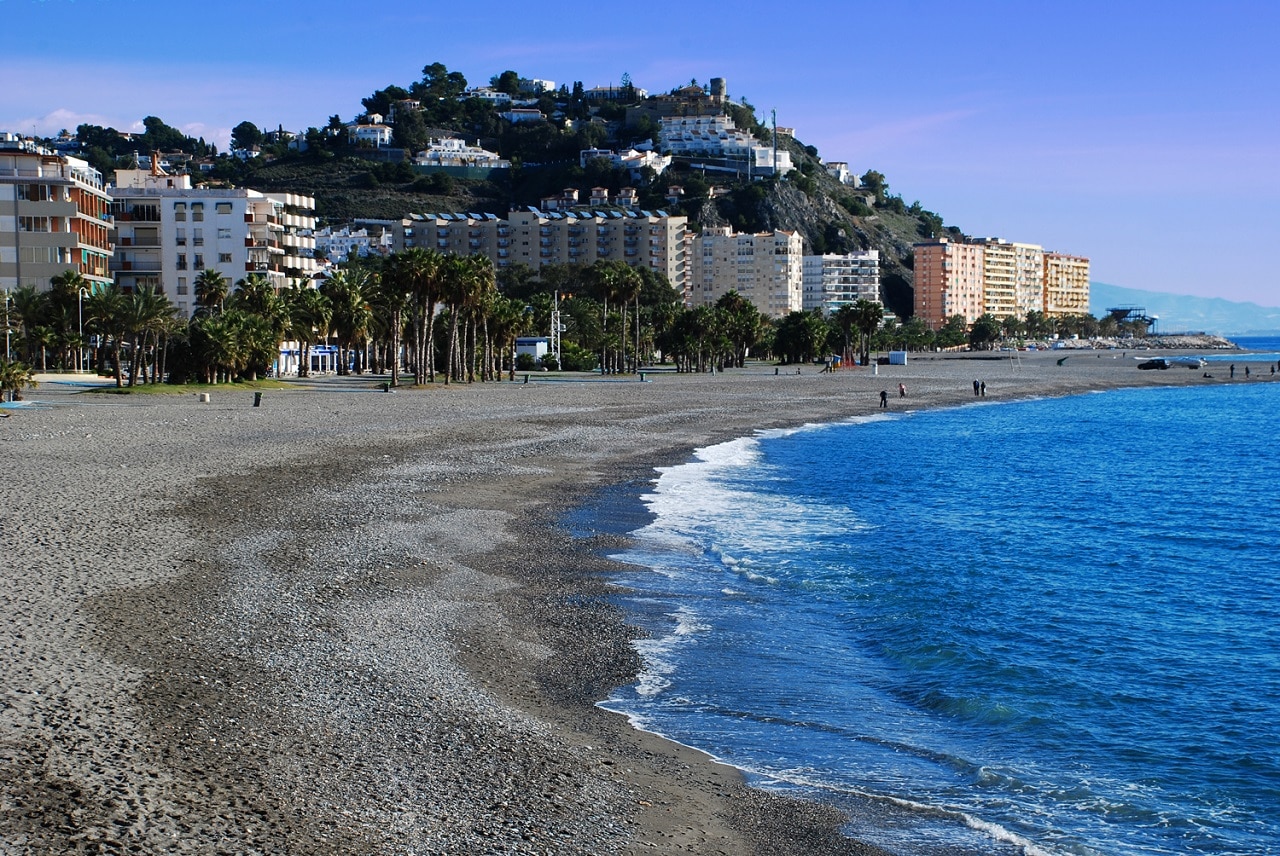
Puerta del Mar beach in Almuñécar
This beautiful town in Granada is located in the southwestern part of the province. In fact, it borders the Malaga municipality of Nerja . It boasts no less than nineteen kilometers of coastline, including beautiful beaches such as Cantarriján, Puerta del Mar, San Cristóbal, Velilla, Los Berengueles, and La Herradura.
But Almuñécar has much more to offer. Inhabited since the 15th century BC, as evidenced by the remains of the Argaric culture found in the area, it was an important Phoenician city and, later, a Roman and Arab one. Abderramán I , who would found the Emirate of Córdoba and whose statue stands in Almuñécar, landed there.
The Cotobro bridge and the columbarium of Torre del Monje , a 1st-century AD funerary pantheon located on the outskirts of the town, date directly from the Roman period . Also found in the area are the Torre de Cabria , built in the 18th century to defend the coast, and the Punta la Mona lighthouse , which stands atop another old watchtower.
Regarding Almuñécar's religious heritage, we recommend visiting the Hermitage of San Sebastián , whose existence is documented as early as the 16th century and which you'll love for its simple design. You should also see the beautiful Church of the Incarnation , a jewel of Granadan Baroque architecture built in the 17th century. Juan de Herrera and Diego de Siloé were responsible for its construction.
Almuñécar also boasts beautiful civil monuments. Among them, visit the castles of San Miguel , a Muslim fortress renovated during the reign of Charles I, and La Herradura , which dates from the 18th century. The Roman aqueduct is also magnificently preserved , despite having been built in the 1st century AD.
These aren't the only archaeological sites you can visit in the area. In El Majuelo Botanical Park, you'll find the remains of an ancient Roman fish-salting factory, as well as a beautiful collection of plants. And in the Cave of the Seven Palaces , located beneath an ancient temple from the same period, is the Archaeological Museum , with numerous artifacts. Among these, a 17th-century BC Egyptian amphora stands out.
Finally, we'll tell you about one of Almuñécar's symbols: the Peñón del Santo , a group of three rocky outcrops offering wonderful views of the Granada coast. The largest one features a viewpoint crowned with a cross.
Salobreña, tourist among the beach towns of Granada
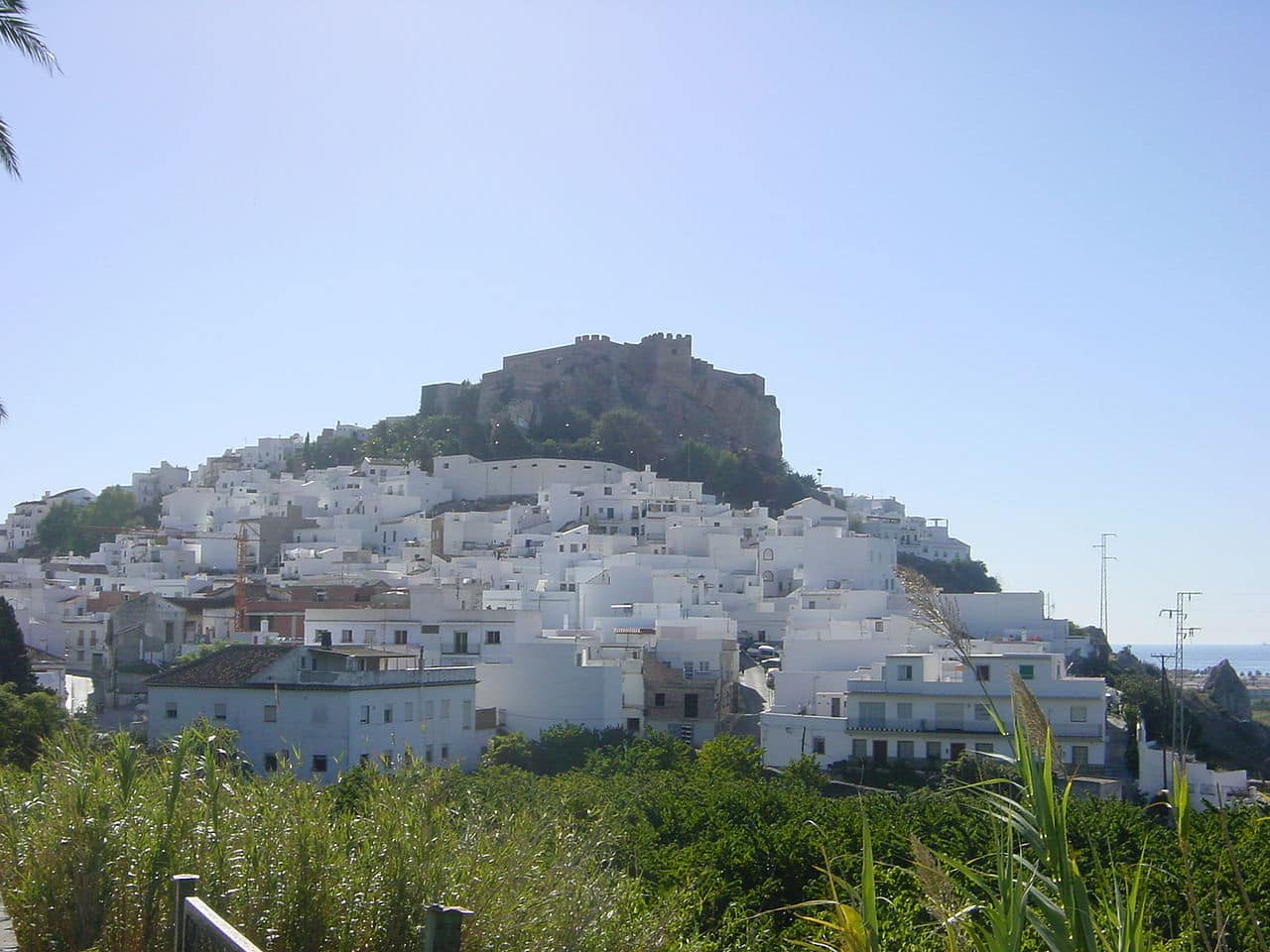
Historical complex of Salobreña with its castle on top
Adjacent to the aforementioned town is Salobreña, one of the most popular destinations for those vacationing in the province of Granada. This is due to its magnificent climate, but above all to its beautiful beaches such as La Guardia, El Caletón, and La Charca.
Furthermore, if you enjoy diving, you should know that the area's seabed is part of a Special Conservation Area called Tesorillo de Salobreña . Alternatively, if you prefer hiking, there's the Mediterranean Trail , a five-kilometer circular route that passes by several beaches, ravines, and cliffs.
The most prominent symbol of this town in Granada province is its castle , which dominates the town from its hilltop perch. Dating back to the 10th century, although it has undergone several renovations, it is a listed Building of Cultural Interest. The castle also comprises an architectural ensemble featuring notable towers such as the Keep, the Powder Magazine, and the Coracha Tower.
But if we're talking about towers in Salobreña, the Cambrón Tower stands out. Dating from the Nasrid period, it's located on a hill next to the ravine of the same name. Its purpose was to defend the coast, and today it forms part of a hotel's gardens. Like the previous tower, it's a Site of Cultural Interest, a designation also shared by the remains of the town walls and the historic center.
The charming Albaicín neighborhood , with its white houses adorned with flowers, belongs to this latter area . Don't miss the views from its viewpoint, perched almost 100 meters high on the cliff. As for Salobreña's religious heritage, we recommend visiting the Church of Our Lady of the Rosary , a magnificent 16th-century Mudéjar building erected on the site of a former mosque. Inside, a 16th-century carving of Our Lady of the Rosary is a highlight.
Motril, immense beaches
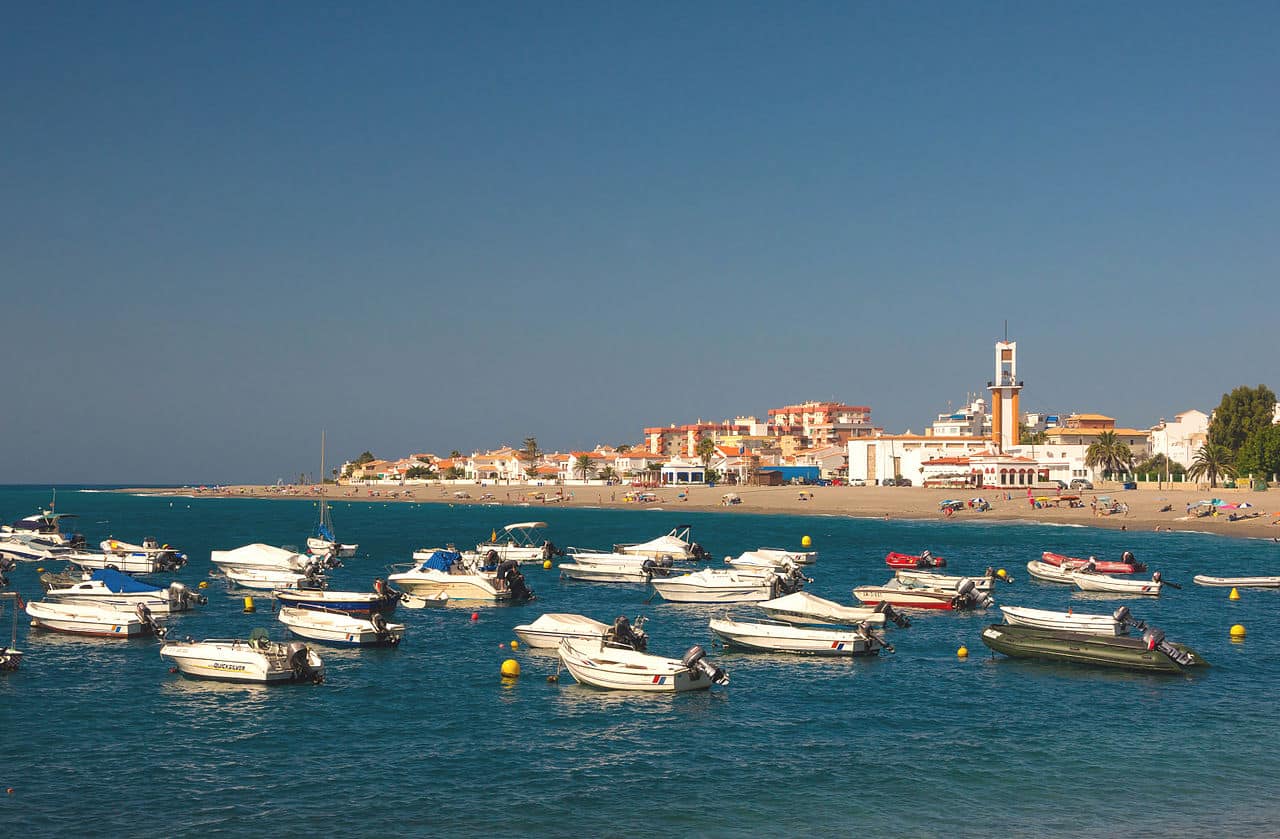
Calahonda beach in Motril
The municipality of Motril borders Salobreña and is notable for having one of the longest beaches in Granada. To give you an idea, Carchuna beach is over 3,800 meters long; Poniente beach , over 2,200 meters; and Granada beach , almost 1,400 meters.
Furthermore, Motril was an important sugar-producing center. Proof of this lies in its two museums dedicated to this industry. The Pre-Industrial Sugar Cane Museum is unique in all of Europe. It shows how this product was obtained before the Industrial Revolution. Meanwhile, the Fábrica del Pilar Sugar Museum displays the machinery that was later used for the same purpose.
In addition, there are two other museums in this town in Granada province. These are the Motril History Museum , located in the 17th-century Casa Garcés , and the José Hernández Quero Art Center , dedicated to this painter. Several other old sugar factories are also preserved, such as Nuestra Señora de la Almudena, San Luis, and Nuestra Señora de las Angustias.
The Casa Condesa de Torre-Isabel is a 19th-century neoclassical building. Also dating from the same period are the Town Hall , the Teatro Calderón de la Barca , the former Hospital de Santa Ana , and the building known as Casa de los Bates.
Even more important is the collection of religious buildings you can see in Motril. Among them, the Church of the Incarnation stands out , built in the early 16th century in the Mudéjar Gothic style. However, it underwent renovations in both the 17th and 18th centuries. Even more striking is the Church of Our Lady of the Head , patron saint of the town. This 17th-century building was almost entirely rebuilt in the 20th century, giving it a Neoclassical touch.
Motril's religious heritage is further enriched by the 17th-century churches of Divina Pastora and the 18th-century Convent of Las Nazarenas, as well as the Sanctuary of Nuestra Señora de la Victoria and the hermitages of Virgen del Carmen, Nuestra Señora de las Angustias (both Baroque), San Antonio de Padua, and San Nicolás.
Iron Castle
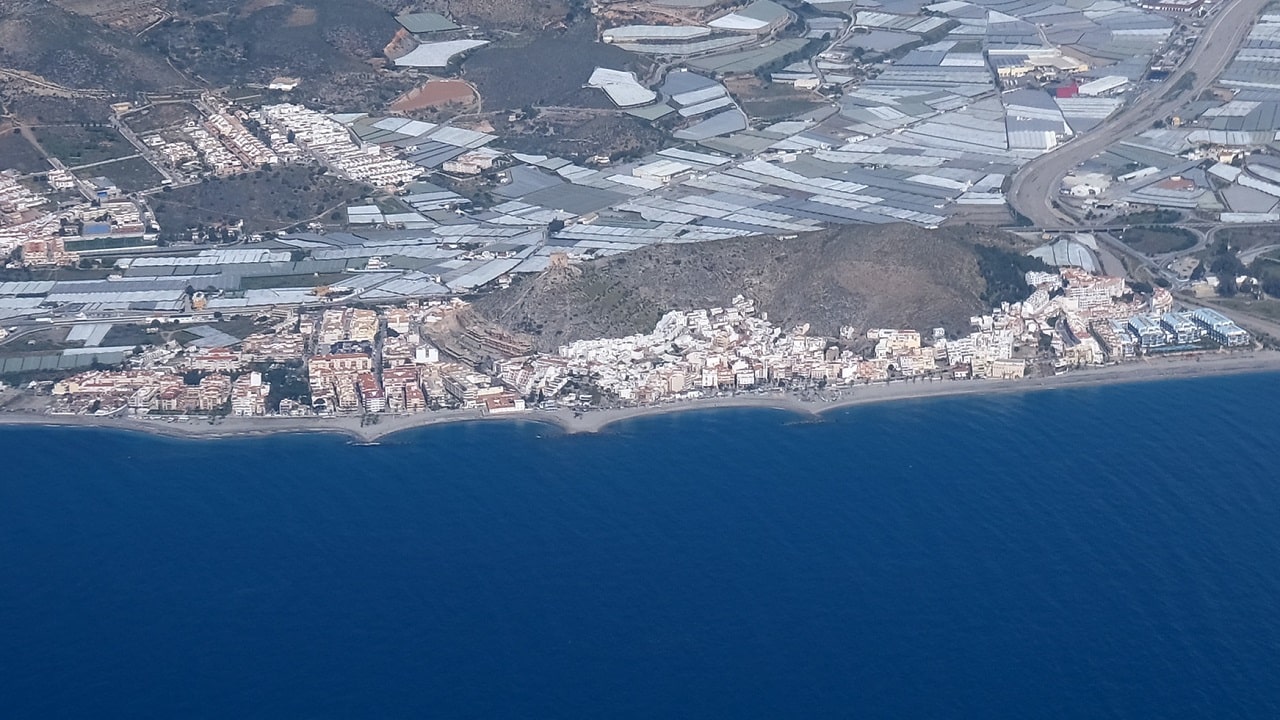
Aerial view of Castell de Ferro
Less well-known among Granada's beach towns than the ones mentioned previously is Castell de Ferro, the capital of the municipality of Gualchos . Consequently, its beaches are less popular. These include Sotillo beach, Castell's own beach, Cambriles beach, and Rijana beach.
Among the monuments of this town, the most notable is the Moorish castle that dominates it from a hilltop. Its construction date has not been established, although it is known that a Roman fortification previously stood on the site. The Rijana tower shares the same origin , also used by the Muslims, and next to it lies an archaeological site from the Caliphate period. However, other watchtowers in the area are later: those of Cambriles and Zambullón date from the 16th century, and the Estancia tower from the 18th.
Furthermore, in the nearby town of Gualchos , located on the slopes of the beautiful Sierra de Lújar , you have the church of San Miguel , built at the beginning of the 16th century, which has a beautiful altarpiece and a carving of this saint.
Sorvilán, an exception to the beach towns of Granada
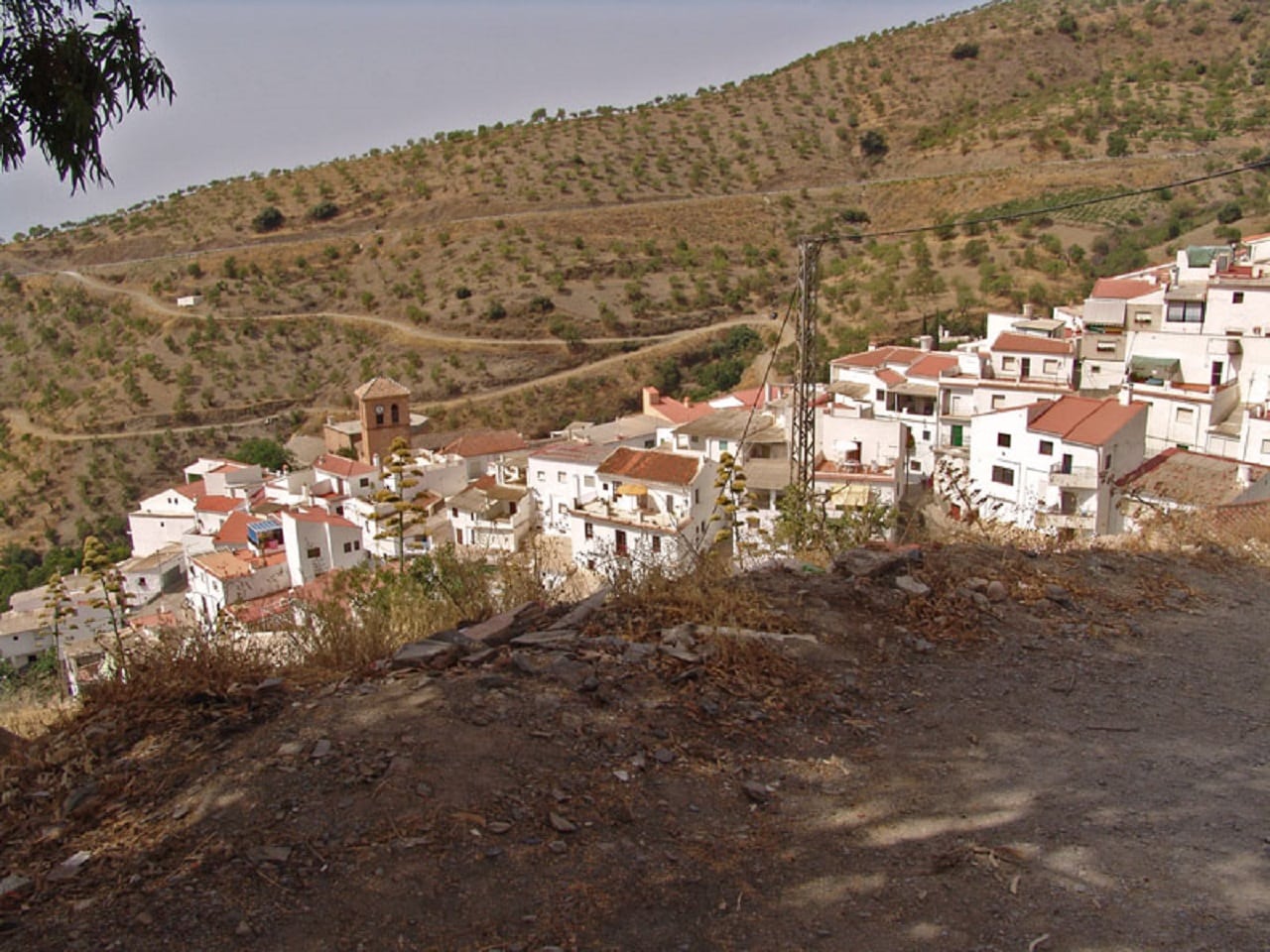
Sorvilán is not one of the beach towns of Granada, but it has four in its municipal area
We now arrive at this small town in Granada, which is also much less well-known than Salobreña or Motril. However, its origins date back to the 10th century, and the municipality it names boasts four beautiful beaches: La Mamola, Los Yesos, La Cañas, and Melicena.
But Sorvilán sits at an altitude of almost 800 meters. Therefore, it has no beach, although its municipal area combines sea and mountains like few other places. In fact, just a few kilometers from the aforementioned beaches are the peaks of Gato and Mondragón.
Furthermore, in this town you can see the beautiful Church of San Cayetano , built in the 17th century on the remains of a mosque. In nearby Melicena , located at the foot of the San Patricio rock , there is a coastal watchtower. And in Alfornón, you'll find an olive oil mill and the Church of San Roque , both from the 19th century. But above all, between this last town and Sorvilán, you have the Rambla del Valenciano , which stands out for its scenic beauty.
In conclusion, we've shown you the most beautiful beach towns in Granada . We could also add Albuñol to this list , which, despite being inland, boasts beautiful beaches within its municipal boundaries. But if you visit these towns, we highly recommend that you also visit Granada city , one of the most beautiful cities in Spain . Doesn't that sound like a great plan?
Table of Contents