
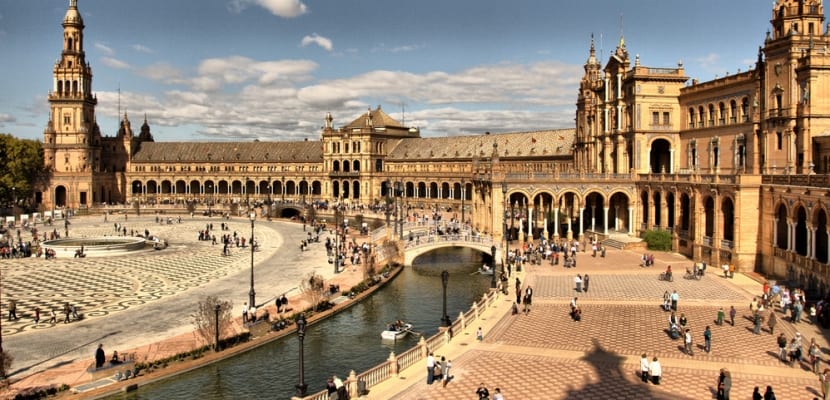
Image of the restored Plaza de España in Seville
Now that the heat seems to be subsiding, it's the perfect time to visit the Andalusian capital and enjoy some of the wonders it offers. Among these, one that stands out is the world-famous Plaza de España, which we'll introduce below so that you'll know some of its most important features when you visit.
Located in the María Luisa Park , the Plaza de España is considered one of the most spectacular examples of regionalist architecture in the area. Its construction took place between 1914 and 1929 for the 1929 Ibero-American Exposition in Seville, and all the provinces of Spain are represented on its benches.
The project was designed by Aníbal González , who was assisted by a large group of engineers and collaborators, and the person responsible for overseeing the proper functioning of the work was King Alfonso XIII, who also laid the first stone of the construction.
The plaza's structure has a semi-elliptical shape, representing Spain's embrace of its former colonies. It covers approximately 50.000 square meters and is bordered by a 515-meter canal crossed by four bridges.
The building was constructed with exposed brick and decorated with ceramics, coffered ceilings, wrought iron, embossed metalwork, and carved marble . In addition, the square also features two Baroque-style towers, each approximately 74 meters tall, and a central fountain, the work of Vicente Traver, which has been heavily criticized for disrupting the aesthetic of the area.