

The Earth has wonderful landscapes and if we think about how they were formed, through the centuries, with sudden and deadly movements of the crust and tectonic plates, they are even more wonderful.
The Andes Mountains are one of the most impressive and extensive mountain ranges in the world, traversing the borders of several South American countries . One of these countries is Peru, and its snow-capped peaks have become a top destination for mountaineering enthusiasts. Let's explore the snow-capped mountains of Peru.
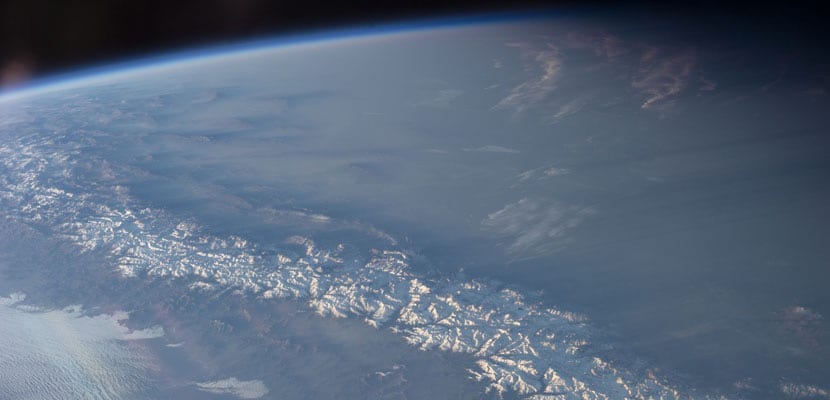
The Andes Mountains form the border of Colombia, parts of Venezuela, Ecuador, Bolivia, Peru, Chile, and Argentina. The average height of its peaks is 4,000 meters, but Aconcagua, its highest peak, located in Argentina, reaches 6960 meters, second only to the Himalayas.
We could say that the Andes are the roof of the Americas , and we wouldn't be wrong. They also contain the highest volcanoes on Earth and stretch for a total of 7240 kilometers . When their long course along the Pacific Ocean ends, they descend into the South Atlantic, near Isla de los Estados, and then, on the other side, almost into the Caribbean Sea.
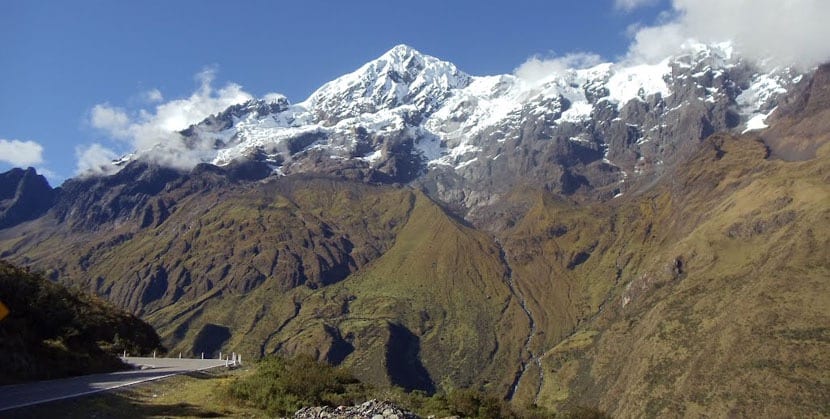
Geologists say that this mountain range in the Americas formed when the Nazca Plate moved beneath the South American Plate toward the end of the Late Cretaceous, the last epoch of the Cretaceous Period, which ended 66 million years ago. This was a subduction zone, so the result is volcanic activity along its length.
The snow-capped peaks of Peru are located in the Central Andes , a region encompassing the Andes Mountains of Bolivia, Argentina, Chile, and Peru. The Incas called these peaks with their eternal snows "Apus, " and they have become popular destinations for mountaineering, trekking, and adventure.
Nevado Huascaran

This snow-capped massif is located in the Ancash region of central Peru. It is extremely high, reaching 6768 meters , and has three peaks with little difference in altitude between them . The granite mass, covered in soil, vegetation, and snow, was formed just over five million years ago.
It is the fifth highest mountain in America and, as everything is a matter of perspective, if the height were measured from the center of the earth, it would be the second highest mountain in the world, that is, almost two kilometers higher than Mount Everest.
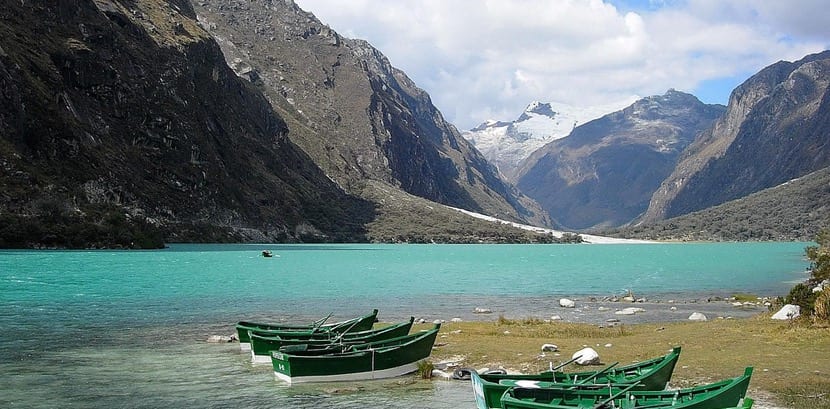
Two deep valleys, or "quebradas" as they're called here, separate it from the mountain range. Huascarán National Park , with its lagoons and popular tourist landscapes, is located in the first valley. The second valley is less well-known, but no less beautiful or record-breaking: it boasts the highest road tunnel in the world , at 4732 meters.
While one of the peaks was successfully climbed to the summit in 1908 by an American woman, Annie Peck, the other peaks were not visited by humans until 1932. The park has been a World Heritage Site since 1985, designated as a Biosphere Reserve for its lagoons and glaciers, which number almost thirty.
Snowy Alpamayo
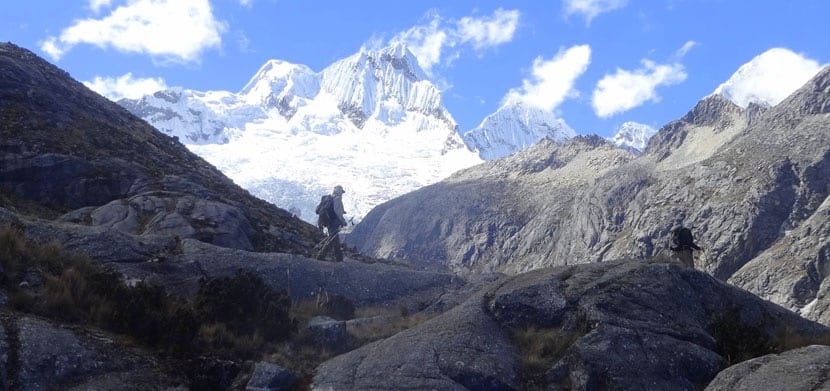
This is another mountain within the same Peruvian department of Ancash. It measures 5947 meters in altitude and is a mass of ice and rock that, for many specialists, holds the title of the most beautiful mountain in the world.
It resembles a perfectly sculpted pyramid , and although it's not exceptionally tall, it's so beautiful that the detail is quickly forgotten. The nearest city to begin the adventure of exploring this Peruvian mountain is Caraz, 467 kilometers from Lima.
Westerners—we'll never know if anyone reached this far before—reached the summit in the 30s. Today, the standard route to the peak is the one opened by a group of Italian mountaineers forty years ago, via the southeast face. It's anything but easy, and, they say, it's similar to the Himalayas.
Snowy Huaytapallana
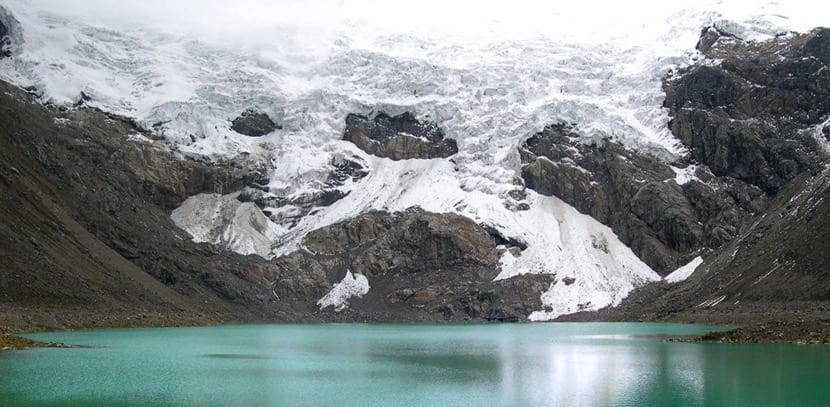
This snow-capped mountain has been a protected area within the Peruvian department of Junín since 2001. It has several peaks, the highest reaching 5557 meters, while the second highest is just below at 5530 meters. Beyond that, there are many other peaks, all exceeding five thousand meters in altitude. What magnificence!
We could describe it as a mini mountain range located just two hours by car from the city of Huancayo, which is itself eight hours from Lima. The base camp for climbing it is at an altitude of four thousand meters, and from there climbers can follow two routes.
Snowy Huandoy
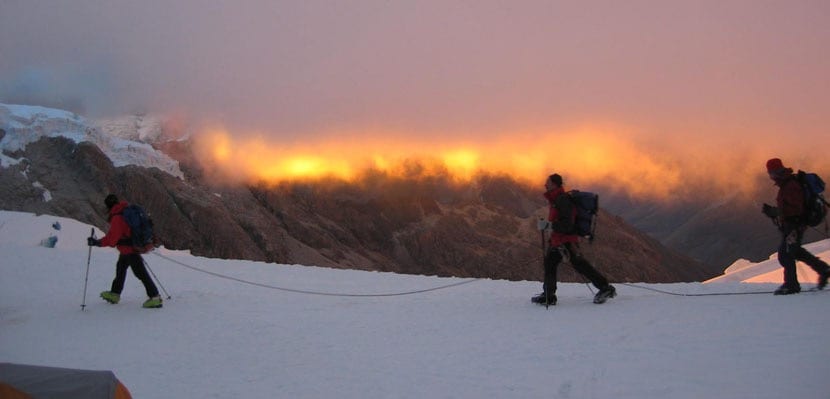
This mountain is also located in the department of Ancash and measures 6395 meters in altitude . Up there, hidden among the clouds and snow, are four snow-capped peaks. It is located north of Huascarán, and climbers reach it from the Llanganuco Valley.
It is located within the area known as Cordillera Blanca , a mountain range of snow-capped peaks that runs parallel to the western coast of Peru for about 180 kilometers and within which, like treasures, there are more than six hundred glaciers, many snow-capped peaks and many at more than five meters in altitude, hundreds of lakes and dozens of rivers.
Snowy Huantsan
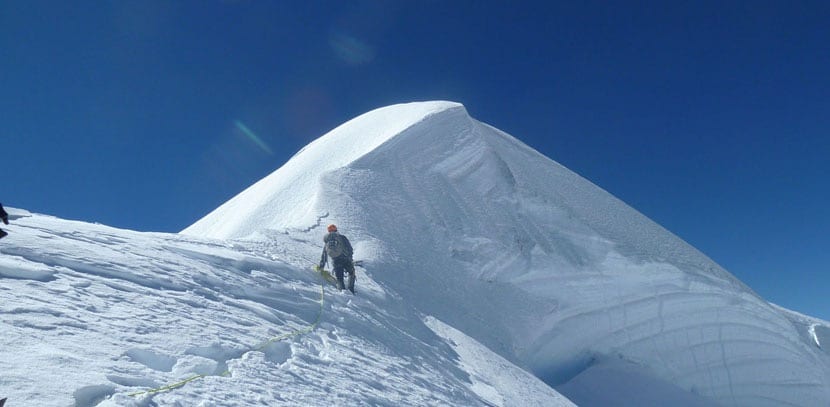
It is also one of the snow-capped peaks of the Cordillera Blanca . It has four peaks, the highest of which reaches 6369 meters, followed closely by the other three. Mountaineers who attempt this snow-capped mountain know they face a very complicated task that demands considerable technique ; so much so that it wasn't until the 50s that a successful summit could be declared.
Tourists arrive at this snow-capped peak in Peru from the city of Huaraz, at the foot of the mountain, and many excursions are available in addition to mountaineering trips. For example, you can take a full-day mountain bike tour that takes you to the Rajucolta Valley and its lagoon, reaching an altitude of four thousand meters. There is an entrance fee to the national park.
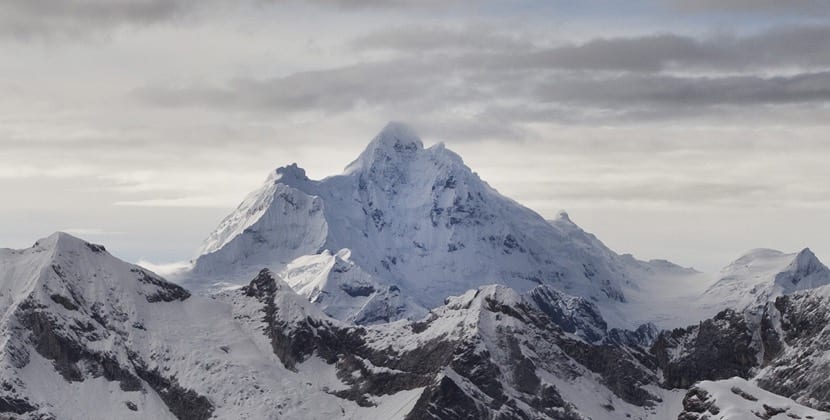
The truth is that these are just some of the so-called snow-capped peaks of Peru. There are many more mountains with permanent snow in Peru , although it's true that the most spectacular ones seem to be concentrated in the department of Ancash.
If you like mountain sports and you need that vision of the world that can only be given to the top of one, then Peru is waiting for you.

Table of Contents